
Key Takeaways
Full breakdown of the 2026 UK Skilled Worker visa salary threshold by sector and SOC code. Know your going rate before you accept a job offer.
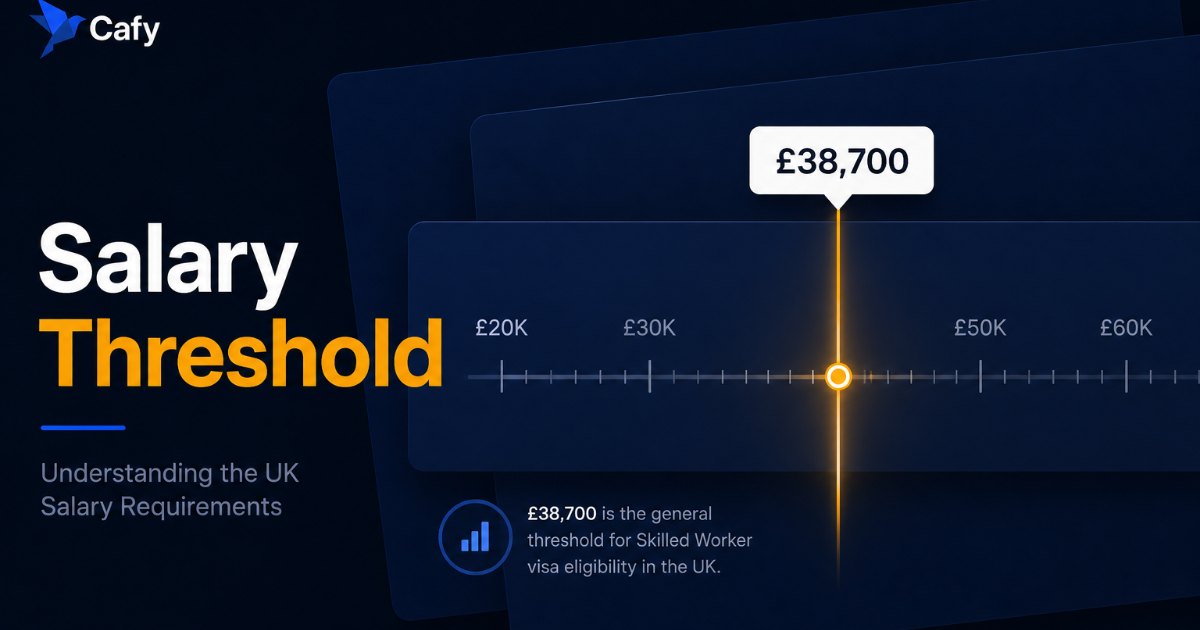
The headline number for 2026 is £41,700. That is the general salary threshold for a Skilled Worker Visa in the UK. If your job offer pays less than £41,700, your visa application will be refused unless your specific SOC code carries a higher going rate, in which case the going rate takes precedence. For most professional roles in technology, finance, and consulting, the going rate sits above £41,700 anyway, so the practical floor is often higher than many applicants realise until the offer letter arrives.
Why the Salary Threshold Exists
The UK Government uses salary thresholds to ensure that overseas workers are being hired at genuinely competitive rates rather than to undercut the resident labour market. The Home Office sets two parallel requirements and your offer must clear both. First, it must meet the general threshold, currently £41,700 per year. Second, it must meet the going rate for your specific Standard Occupational Classification code, which is the government's way of benchmarking pay by job type. Whichever of those two figures is higher is the number that counts. Many applicants focus only on the headline threshold and then discover their SOC code going rate is £48,000 or £55,000, making the offer they accepted insufficient for visa purposes.
Understanding SOC Codes and How to Find Yours
A Standard Occupational Classification code, or SOC code, is a four-digit number the Home Office uses to categorise every eligible job on the Skilled Worker route. Your sponsoring employer assigns the SOC code on your Certificate of Sponsorship, and that code determines the going rate that applies to you personally. You can look up eligible occupations and their going rates at gov.uk/guidance/skilled-worker-visa-going-rates-for-eligible-occupations. Search by job title, then check the going rate column for your code. The going rate is expressed as an annual salary. If your offer letter matches or exceeds both the going rate for your SOC code and the £41,700 general threshold, you clear the pay requirement. If it falls short of either, the application fails at that point regardless of how strong everything else in your file is.
Salary Ranges by Sector, Real Numbers
Going rates vary considerably depending on your field. The figures below reflect typical going rates and general thresholds for common sectors in 2026.
• Technology: software developers, data scientists, and IT project managers typically fall in the £45,000 to £65,000 range depending on seniority. Senior engineers and architects can exceed £70,000 at the going rate level.
• Finance: analyst and associate roles often sit between £40,000 and £55,000 at going rate. Senior finance managers and investment professionals can see going rates of £70,000 to £80,000 or above.
• Consulting: graduate scheme entrants at large professional services firms typically start at £30,000 to £35,000. Whether these qualify under the general threshold or a concession depends on whether a graduate entrant route is active. Verify current status before accepting an offer at this level.
• NHS and healthcare: clinical roles follow NHS pay bands. Some healthcare occupations have had bespoke rules. Band 5 nursing roles, for example, have been on the shortage occupation list and carried different thresholds.
• Engineering: civil, mechanical, and chemical engineers range from £38,000 to £60,000 depending on level. Some shortage-listed engineering roles carry a reduced going rate.
The Graduate Entrant Concession, Current Status
For a period, the Home Office allowed certain new graduates in their first job to qualify at 70 percent of the going rate for their occupation. This was part of a broader set of concessions introduced alongside the 2022 threshold changes. However, the April 2024 salary threshold increase to £38,700 removed many of those lower concessions, and the subsequent rise to £41,700 compressed them further. As of the information available for 2026, the graduate concession in its original form is no longer active in the same way. You should verify this directly at gov.uk/skilled-worker-visa/your-pay before assuming any reduced rate applies to you. The absence of a functioning graduate concession is one of the biggest practical surprises for people using Cafy to navigate their post-graduation options, and it is worth confirming before you negotiate your salary.
Shortage Occupation List, Reduced Thresholds
Some roles qualify for a reduced going rate because they appear on the Immigration Salary List, which replaced the previous Shortage Occupation List following recommendations from the Migration Advisory Committee in 2024. Roles on the Immigration Salary List may have their going rate reduced by 20 percent, meaning the effective threshold is lower than for comparable non-listed roles. The list was revised in July 2024 and is subject to further review. Healthcare roles, some engineering specialisations, and certain education roles have historically appeared on it. The practical implication is that if your occupation is on the Immigration Salary List, the going rate you need to clear is lower, which can make a difference of several thousand pounds annually. Check the current list at gov.uk before assuming your role qualifies, because MAC reviews can remove roles from one cycle to the next.
NHS Roles and Specific Pay Band Rules
Healthcare is one of the most sponsor-heavy sectors for international graduates, and salary rules are more structured here than elsewhere. NHS pay in England follows Agenda for Change bandings. Band 5 roles, which include newly qualified nurses and many allied health professionals, start at approximately £29,970 and rise through increments. These roles have historically had specific rules under previous shortage occupation provisions. However, the general £41,700 threshold now sits above Band 5 entry pay, which means certain NHS roles that previously qualified under reduced thresholds may have narrowed eligibility. Doctors and dentists follow a separate pay structure under medical and dental pay scales. Senior doctors in specialty training and above typically earn well above £41,700. If you are entering an NHS role, confirm with your HR department which pay band applies and verify the current going rate for your specific SOC code.
What Happens When a Job Offer Comes in Below the Threshold
This is where the numbers stop being abstract and start being career-defining. If an employer offers you £38,000 and your going rate is £43,500, the Certificate of Sponsorship they issue will result in a refused visa application. The offer is not the problem. The threshold is the problem. You have three practical options. First, negotiate the salary upward. If the role is a genuine hire and the employer wants you, a conversation about visa compliance requirements is legitimate and many employers will adjust. Second, walk away. A below-threshold offer with a sponsor who cannot or will not match the going rate is a dead end. Third, verify whether your SOC code has been assigned correctly. Occasionally employers assign a code that carries a higher going rate than the actual job requires. A more accurate SOC code might reduce the going rate and make the offer compliant. Cafy helps you model these scenarios before they respond to an offer, so the decision is made with clear numbers rather than assumptions.
How to Check Your Specific Going Rate Step by Step
Start at gov.uk/guidance/skilled-worker-visa-going-rates-for-eligible-occupations and use the search to find your job title. Note the SOC 2020 code shown alongside the listing. Check the going rate in the annual salary column. Then go to gov.uk/skilled-worker-visa/your-pay and confirm the current general threshold. Your effective minimum is whichever figure is higher. If your role appears on the Immigration Salary List, apply the 20 percent reduction to the going rate only, not to the general threshold. Write these numbers down before you go into salary negotiation with any employer. An offer that looks reasonable in isolation can still fall short of the going rate for your SOC code. Employers who are experienced with sponsoring will typically know these numbers, but newer sponsors sometimes get it wrong. Being informed means you can catch the discrepancy early rather than after you have already resigned from your current role.
Frequently Asked Questions
What is the skilled worker visa salary threshold for 2026 in the UK?
The general salary threshold is £41,700 per year. Your offer must also meet or exceed the going rate for your specific SOC code, and you must clear whichever of the two figures is higher. For many professional roles the going rate sits above £41,700, making the going rate the effective floor.
Can I qualify on a lower salary if I am a recent graduate?
The original new graduate concession that allowed 70 percent of the going rate has effectively been wound down following the April 2024 and subsequent threshold increases. You should verify the current position at gov.uk/skilled-worker-visa/your-pay before accepting any offer below £41,700.
What is the Immigration Salary List and does it affect my threshold?
The Immigration Salary List replaced the previous Shortage Occupation List in 2024. Roles on this list may qualify with a going rate 20 percent lower than the standard figure. It does not reduce the general £41,700 threshold. The list is reviewed periodically by the Migration Advisory Committee.
How do I find the going rate for my SOC code?
Visit gov.uk/guidance/skilled-worker-visa-going-rates-for-eligible-occupations, search for your job title, and note the going rate shown against your SOC 2020 code. Cross-reference with the general threshold at gov.uk/skilled-worker-visa/your-pay. Cafy also helps you map your job offers to the correct thresholds at cafy.careers.
What should I do if my job offer is below the going rate?
You have three options: negotiate the salary up to meet the going rate, confirm whether your employer has assigned the correct SOC code, or decline the offer. Accepting a below-threshold offer and proceeding to a visa application will result in refusal. The employer cannot simply write a letter saying they intend to pay more later.
Frequently Asked Questions
The general salary threshold is £41,700 per year. Your offer must also meet or exceed the going rate for your specific SOC code, and you must clear whichever of the two figures is higher. For many professional roles the going rate sits above £41,700, making the going rate the effective floor.
The original new graduate concession that allowed 70 percent of the going rate has effectively been wound down following the April 2024 and subsequent threshold increases. You should verify the current position at gov.uk/skilled-worker-visa/your-pay before accepting any offer below £41,700.
The Immigration Salary List replaced the previous Shortage Occupation List in 2024. Roles on this list may qualify with a going rate 20 percent lower than the standard figure. It does not reduce the general £41,700 threshold. The list is reviewed periodically by the Migration Advisory Committee.
Visit gov.uk/guidance/skilled-worker-visa-going-rates-for-eligible-occupations, search for your job title, and note the going rate shown against your SOC 2020 code. Cross-reference with the general threshold at gov.uk/skilled-worker-visa/your-pay. Cafy also helps you map your job offers to the correct thresholds at cafy.careers.
You have three options: negotiate the salary up to meet the going rate, confirm whether your employer has assigned the correct SOC code, or decline the offer. Accepting a below-threshold offer and proceeding to a visa application will result in refusal. The employer cannot simply write a letter saying they intend to pay more later.
More guides on Visa sponsorship
- How to Check If a UK Company Has a Sponsor Licence (2026)
- How to Avoid Applying to UK Companies That Cannot Sponsor You
- UK Companies That Sponsor Work Visas for Graduates in 2026
- Best UK Sectors for Visa Sponsorship Jobs in 2026
Tools for this step: Visa sponsorship jobs and Sponsor licence checker.
Sources
This article is for informational purposes only and does not constitute legal or immigration advice. Rules change frequently - always check the current gov.uk guidance or speak to a qualified immigration adviser before making any decisions.